Your Free Guide is On Its Way! Please check your e-mail inbox, Promotional Folder or your spam Box!
Transform Your CPAT Prep in Just 8 Weeks – Start Today!

8 weeks! Smarter training! Complete confidence!
FROM GASSING OUT TO FIRE-READY IN 8 WEEKS
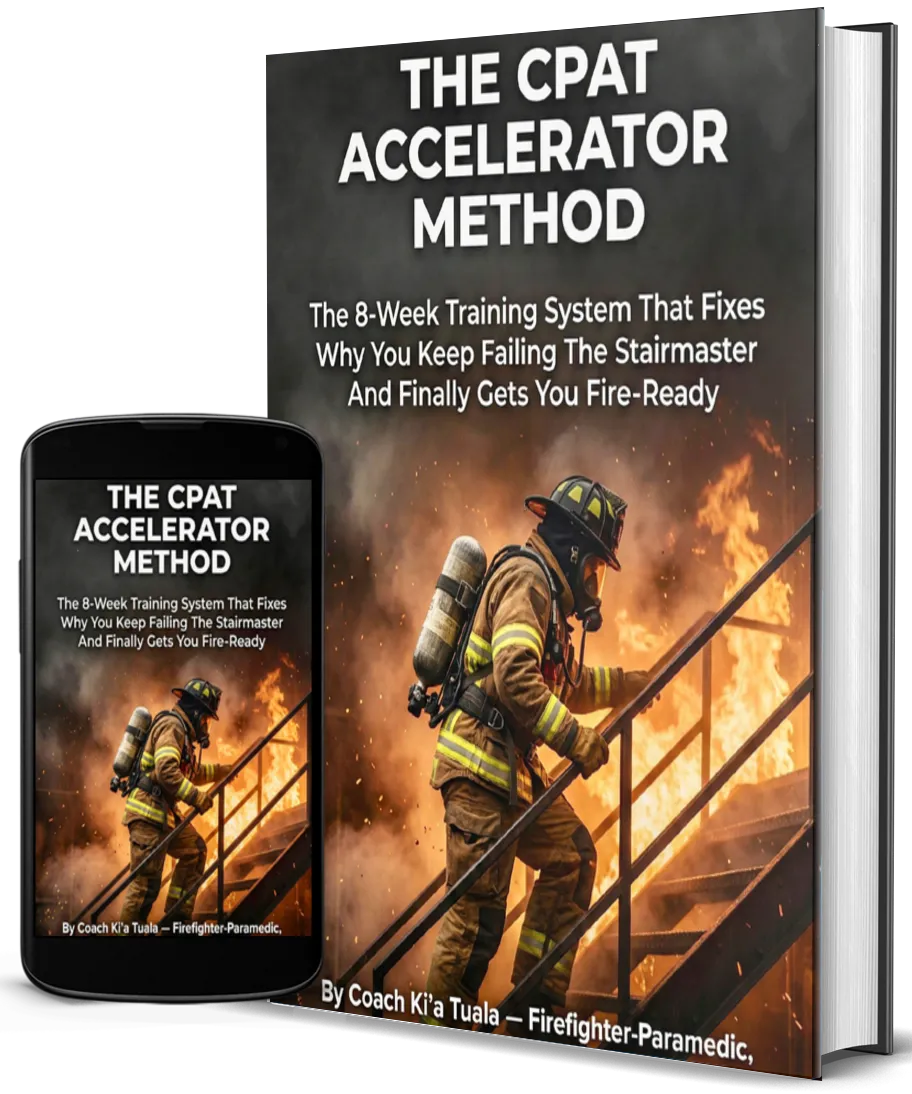
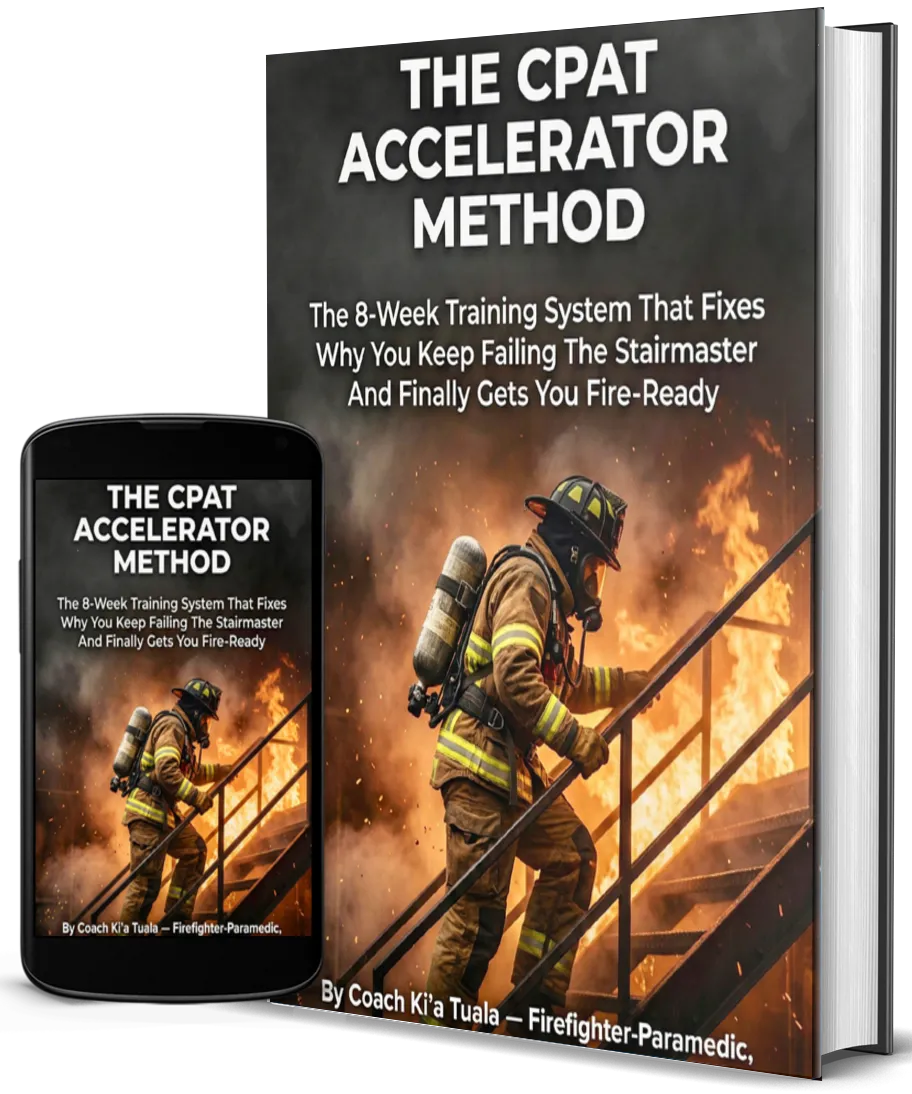
How To Train Smarter, Eliminate CPAT Weak Points,
And Pass With Confidence In Just 8 Weeks. (even if you’ve failed before, touched the rails, or burned out halfway up the stairs)
So you can fix it fast and move on to starting your fire career with confidence.

"I failed my first CPAT attempt, but after 8 weeks with the Accelerator, I passed on my second try! The program showed me exactly where I was weak and how to fix it."
- Anthony M., Firefighter Candidate
500+
Satisfied Clients
24+
Years Expirience
15 years
Frontliine Firefighter
8
Weeks Start to Finish
the firefighter-built system that’s turning failed cpat attempts into fire-ready success stories in just 8 weeks
“I trained for months and still failed at 2:45. My legs burned out, my breathing fell apart, and I touched the rails twice before they stopped me.”
I’ve Been There.
The panic, the exhaustion, the embarrassment of hearing “fail” after months of hard work. You’re not lazy. You’re not weak. You’re training the wrong way.
Before I built this Method, my own prep was a mess.
I ran miles every week. I did CrossFit circuits. I lifted heavy.
But when I stepped on the stair machine with 75 pounds strapped to my shoulders—none of it mattered.
My legs melted. My breathing went chaotic. I touched the rails.
Sound familiar?
Now my daily struggle looked like this:
Burning out on the stair climb within two minutes
Grabbing the rails without realizing it
Training hard but never improving my test time
Feeling lost between random YouTube advice and gym routines
Watching other candidates pass while I retested and delayed my career
I tried everything people said would help:
More running (just made me more tired, not better under load)
CrossFit WODs (built endurance, but not CPAT-specific balance or breathing)
Generic firefighter prep classes (expensive, one-size-fits-all, no accountability)
Heavy leg days (strength improved, but still failed at pacing)
Extra stair sessions (without structure—overtrained and gassed faster)
After my second failure, I hit my breaking point.
Then I Discovered Something That Changed Everything.
Through coaching other firefighter candidates and working as a proctor, I realized:
The problem isn’t effort. It’s inefficient training.
You’re not building the specific adaptations the test demands.
According to IAFF and proctor data, over 70% of candidates fail due to fatigue or rail-touching before 3:00 minutes.
It’s not strength — it’s sequence, breathing, and balance.
Key Insights I Learned:
Endurance under load must be built progressively — not through random cardio.
Breathing technique dictates performance more than leg power.
Balance and posture are the real rail-free skills — not willpower.
Mental pacing and rhythm can be trained like a muscle.
But most candidates never learn this because:
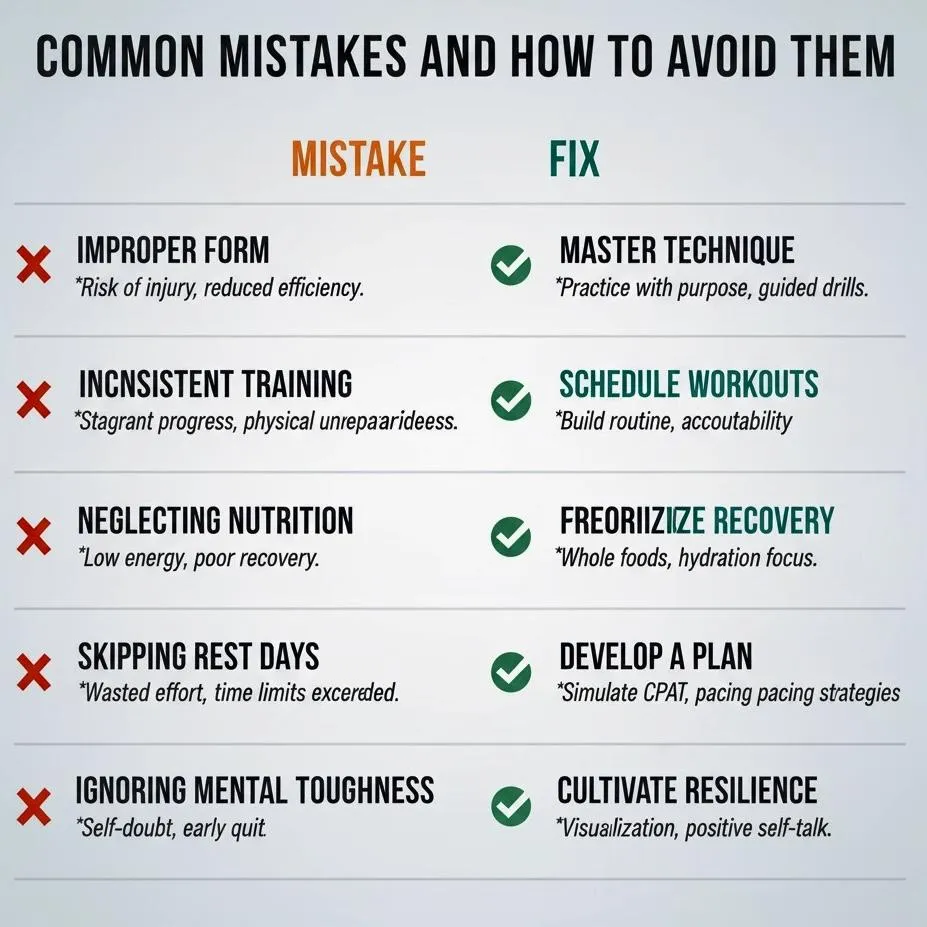
They unknowingly train their bodies to fail—building habits that don’t translate to test conditions.
💡 By combining load-specific training, controlled breathing, and balance progression, I was able to:
Cut my stair time by over a minute
Pass cleanly, rail-free, under full load
Build controlled endurance that never fades under stress
Eliminate panic breathing and mid-test burnout
Finally move from “almost ready” to fire-ready
After helping hundreds of candidates replicate those results, I refined it into a digital step-by-step system anyone can follow — even if nothing else has worked before.
The CPAT Accelerator Method
This is your step-by-step, proven system to go from gassing out to fire-ready.
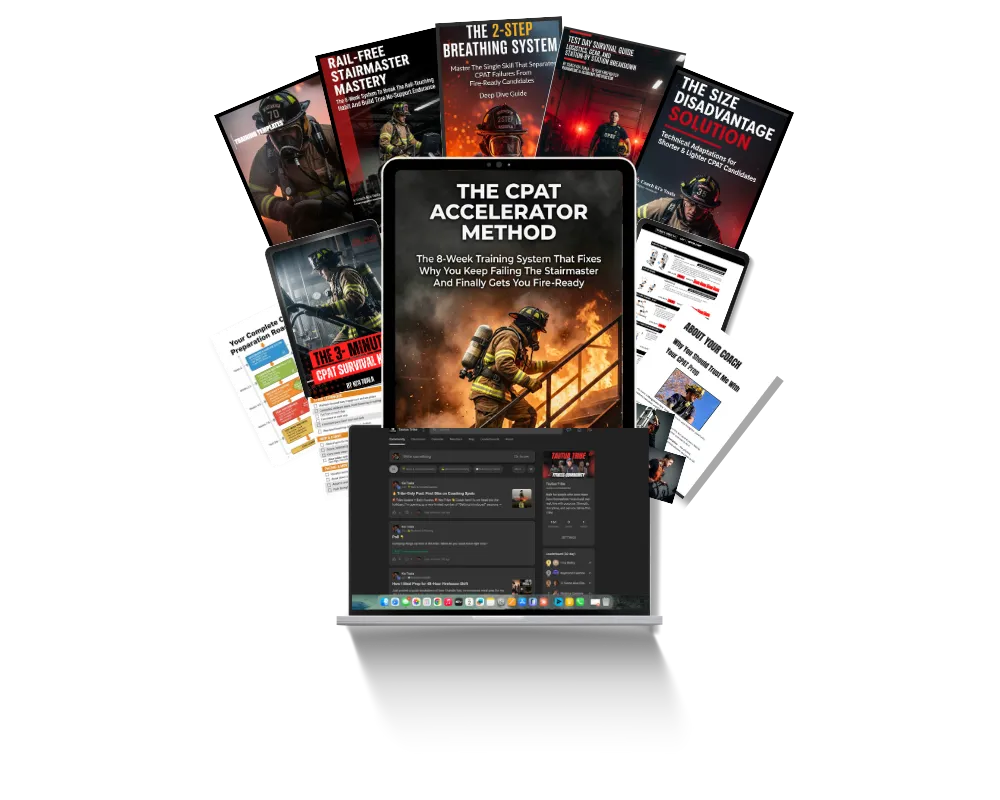
The CPAT isn’t just about working harder—it’s about working smarter. With the Accelerator, you’ll Get:
🧱 The Complete CPAT Accelerator (8-Week Digital Program)
4 progressive phases that build strength, stamina, and control under load.
Each week maps your exact workouts, drills, and breathing cues.
Designed by a firefighter for firefighter candidates.
🎁 Plus These 5 Tactical Bonus Guides
The 2-Step Breathing System — Master the breathing rhythm that prevents panic fatigue.
Rail-Free Stairmaster Mastery — 6-week system to break the rail-touching habit permanently.
The Size Disadvantage Solution — Mechanical leverage and positioning for smaller candidates.
Mental Control for the CPAT Stairmaster — Tactical guide to push through when others quit.
Test Day Survival Guide — Pre-test nutrition, gear checklist, and DQ-proof strategy.
Total Retail Value: $902
Today Just $47




⚡ Don’t Wait – Take Action Now
The sooner you start, the sooner you’ll be fire-ready. 8 weeks. Smarter training. Complete confidence. Your CPAT success story starts today.
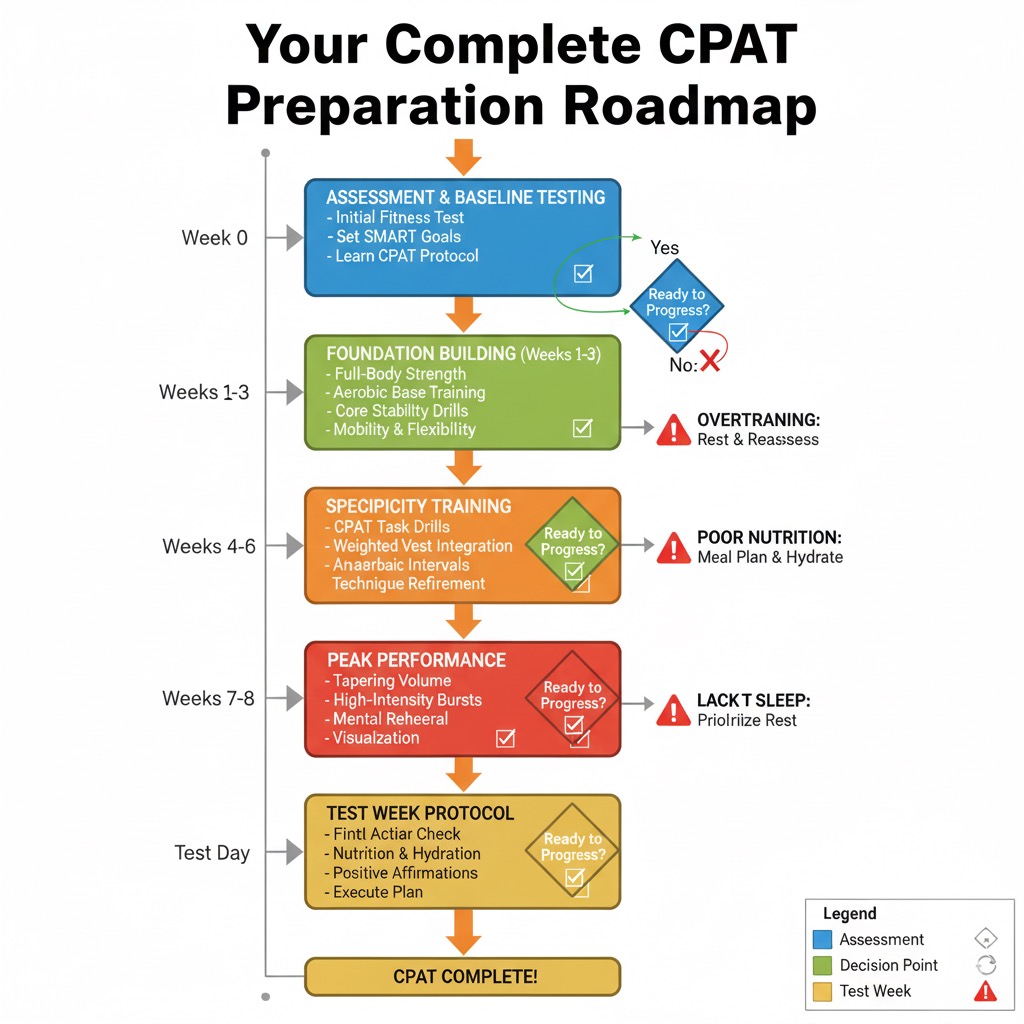
Total Retail Value: $902
Today Just $47
🔒100% Secure 256-Bit Security Encryption


The 4 Firefighter Skills You Must Master (That The Gym Doesn’t Teach)
what separates pass-ready from failure-prone
Load Tolerance
Train your body to carry and climb under 75 lbs for 3+ minutes. Without this, your legs collapse by minute two.
Breathing Control
Master the “in-2 / out-2” pattern used by career firefighters to regulate heart rate. Without it, panic breathing sets in and stamina dies early
Rail-Free Balance
Build the neuromuscular control that keeps you upright under fatigue. Without it, your hand drifts to the rails — and you fail.
Mental Grit Under Fatigue
Stay composed when your body screams “stop.” Without it, your mind quits before your body does.
What We Offer
🚨 instant access: start training smarter today
Here’s everything you get inside The CPAT Accelerator Method:
🧱 The Complete CPAT Accelerator (8-Week Digital Program)
🧱 The Complete CPAT Accelerator
(8-Week Digital Program)
4 progressive phases that build strength, stamina, and control under load.
Each week maps your exact workouts, drills, and breathing cues.
Designed by a firefighter for firefighter candidates.
Plus, JOIN TODAY And You'll Also Get:
These 5 Tactical Bonus Guides
INCLUDED!
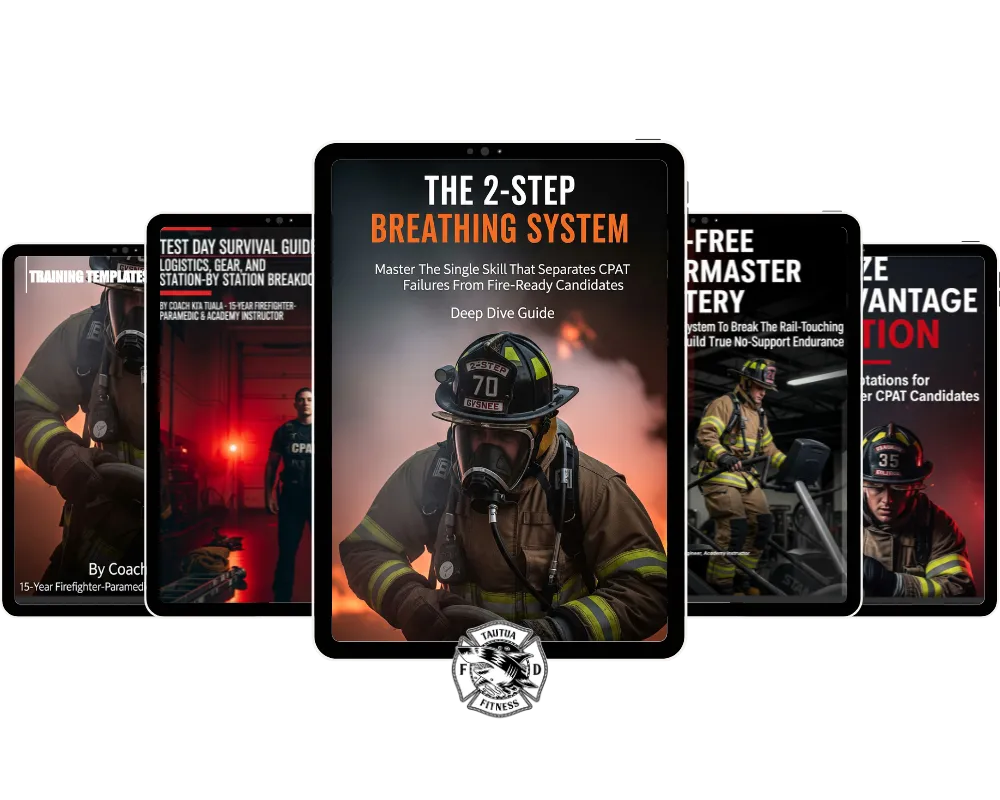
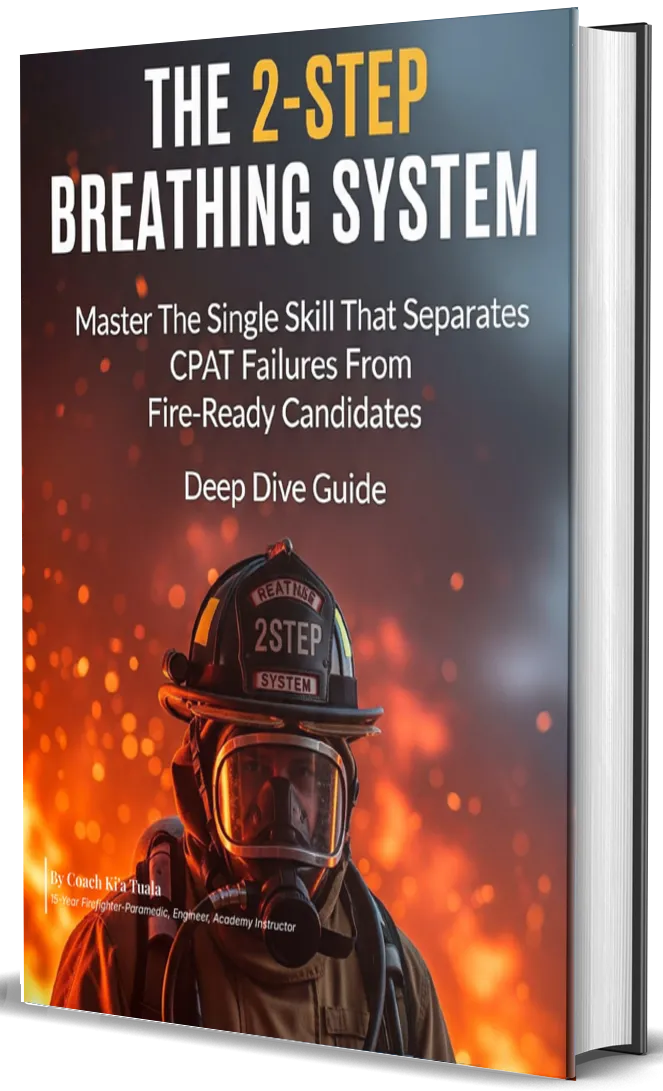
Bonus #1
The 2-Step Breathing System
Master the breathing rhythm that prevents panic fatigue.
($97 Value)
INCLUDED
Bonus #2
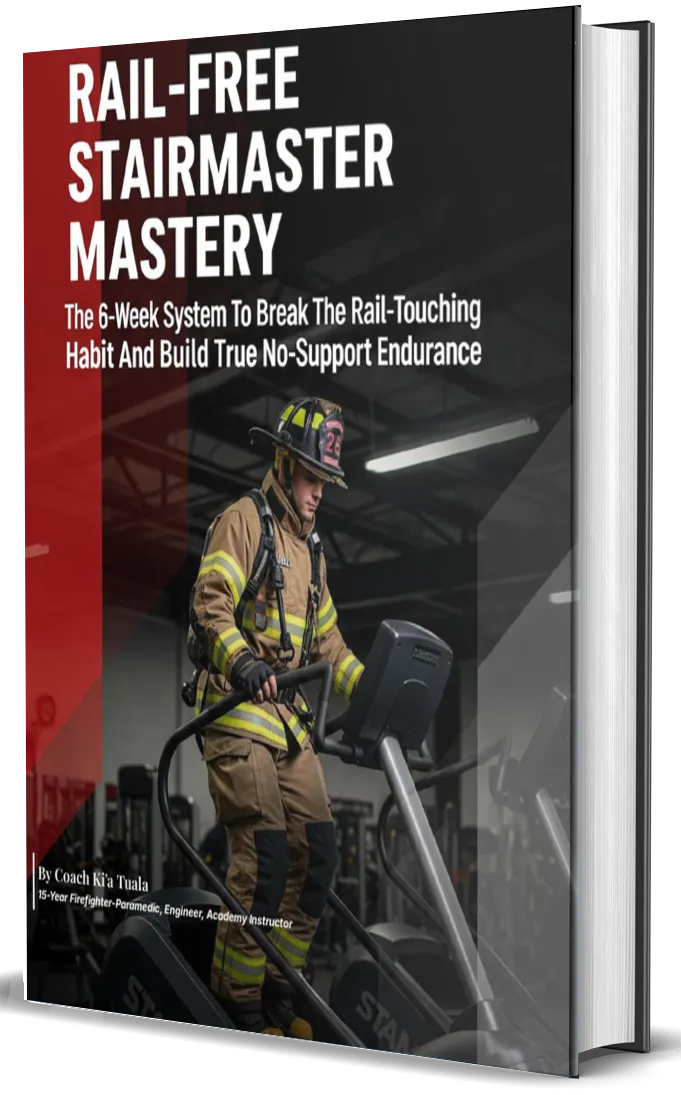
Rail-Free Stairmaster Mastery
6-week system to break the rail-touching habit permanently.
($97 Value)
INCLUDED
Bonus #3
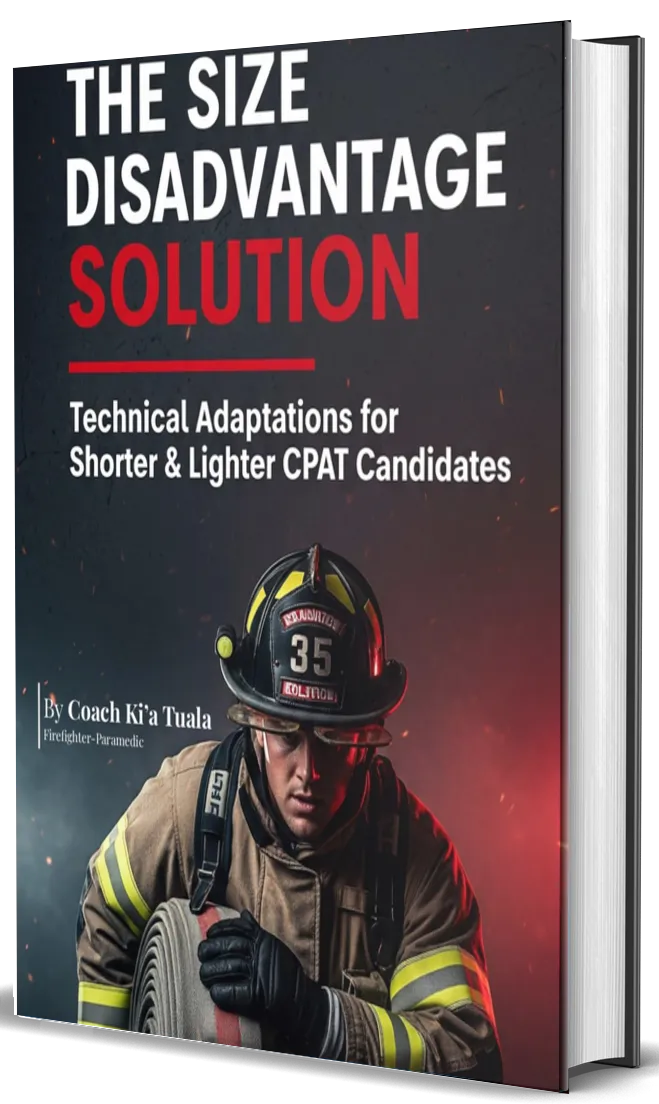
The Size Disadvantage Solution
Mechanical leverage and positioning for smaller candidates.
($97 Value)
INCLUDED
Bonus #4
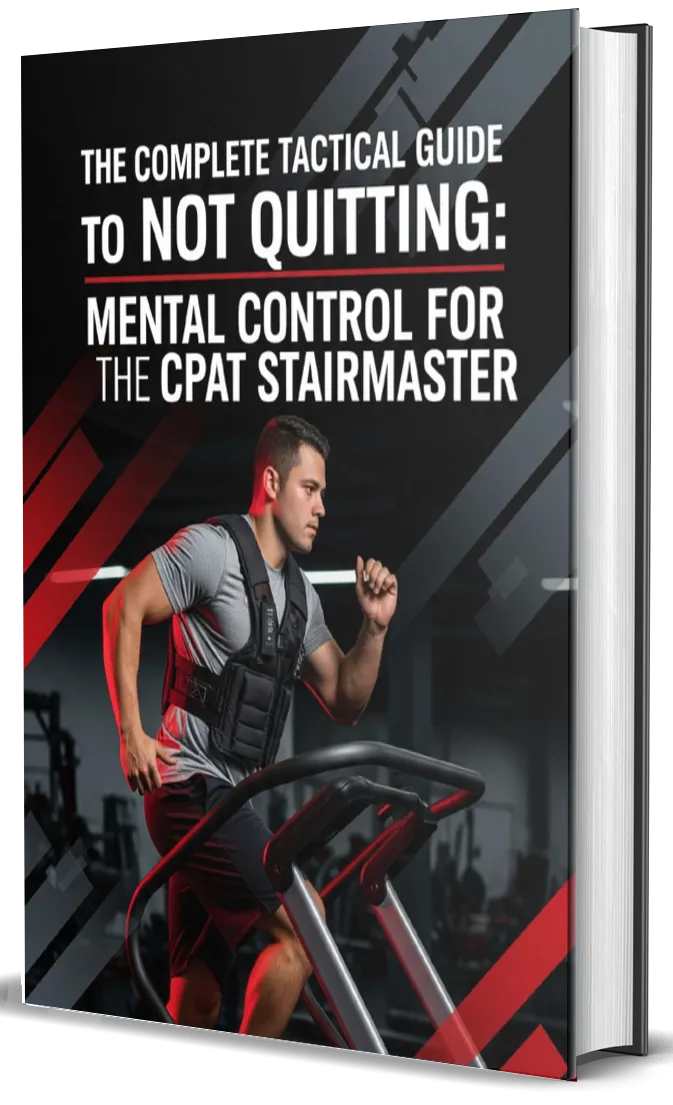
Mental Control for the CPAT Stairmaster
Tactical guide to push through when others quit.
($97 Value)
INCLUDED
Bonus #5
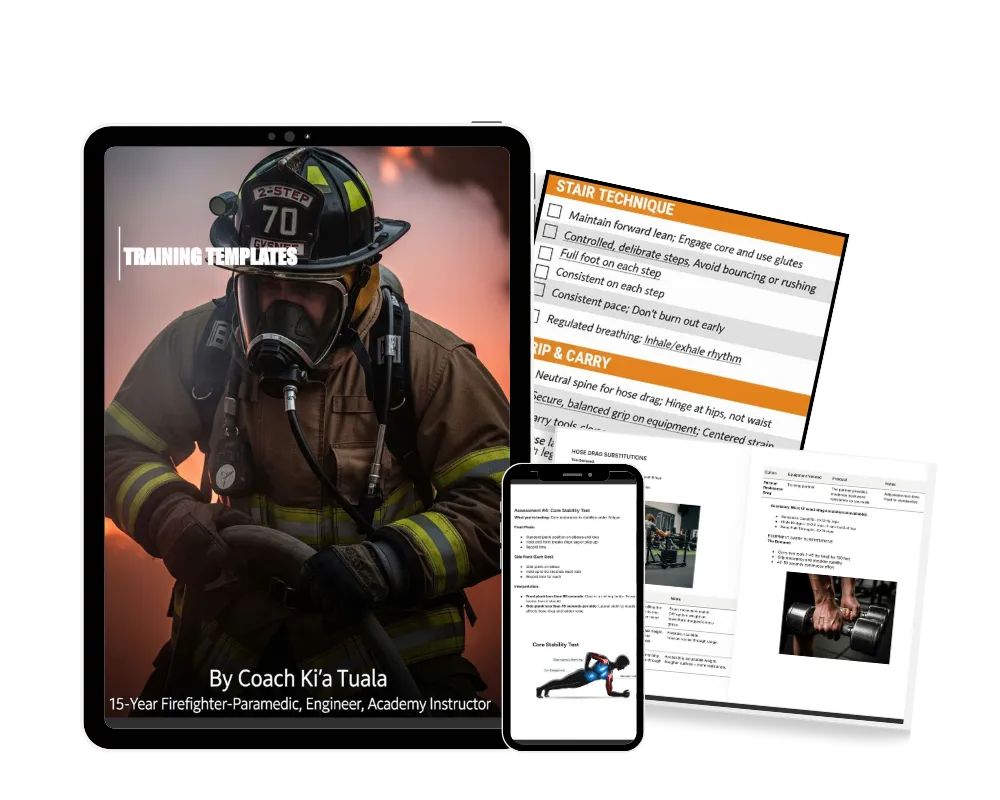
Training Templates Appendix
Pre-test nutrition, gear checklist, and DQ-proof strategy.
($17 Value)
INCLUDED
No fine print. No games. Just results.
PASS-READY OR DON’T PAY!
Complete the 8-week plan, track your sessions using the templates, and if you’re not CPAT-ready — you get a full refund.
The Transformation You Can Expect
The Old Ways vs. the cPAT accelerator
before the cPAT accelerator
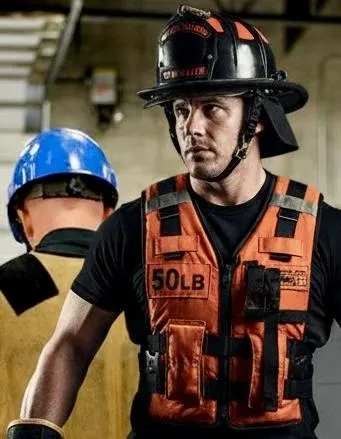
Legs on fire at 2:00
Grabbing rails automatically
Inconsistent training, no structure
Anxiety about failing again
Feeling “fit” but not CPAT-ready
After The CPAT Accelerator
Strong, balanced, rail-free
Confident pacing and breathing
Structured 8-week plan with trackable progress
Calm, composed, and ready on test day
Certified and moving on to the next step of your career
Your Fire-ready Transformation Begins Here
The 5 Components That Transform “Almost Ready” Into “CPAT Pass”
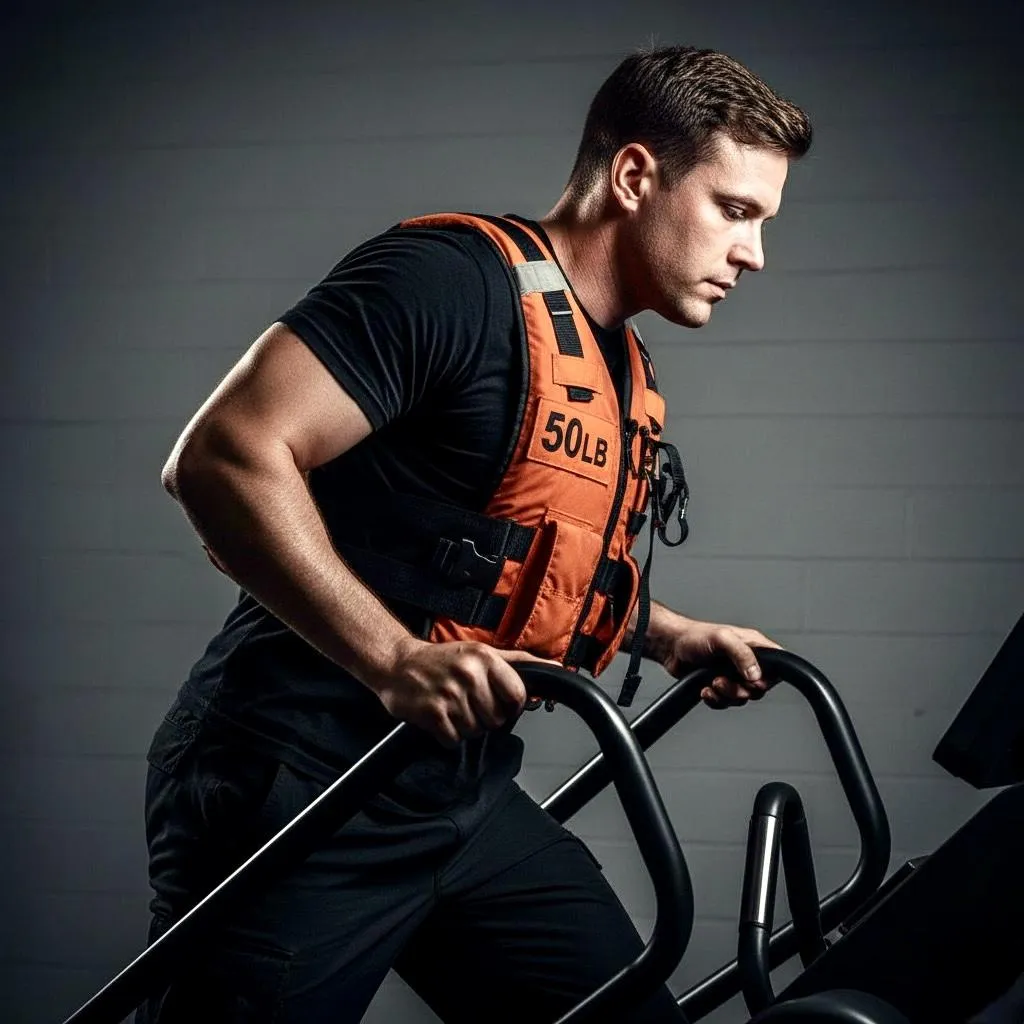
Phrase #1
Foundation Phase (Weeks 1–2)
Build base endurance and breathing rhythm-train your lungs before your legs.
Build base endurance and breathing rhythm
-train your lungs before your legs.
Focused stair pacing drills
Recovery breathing resets
Early stability training
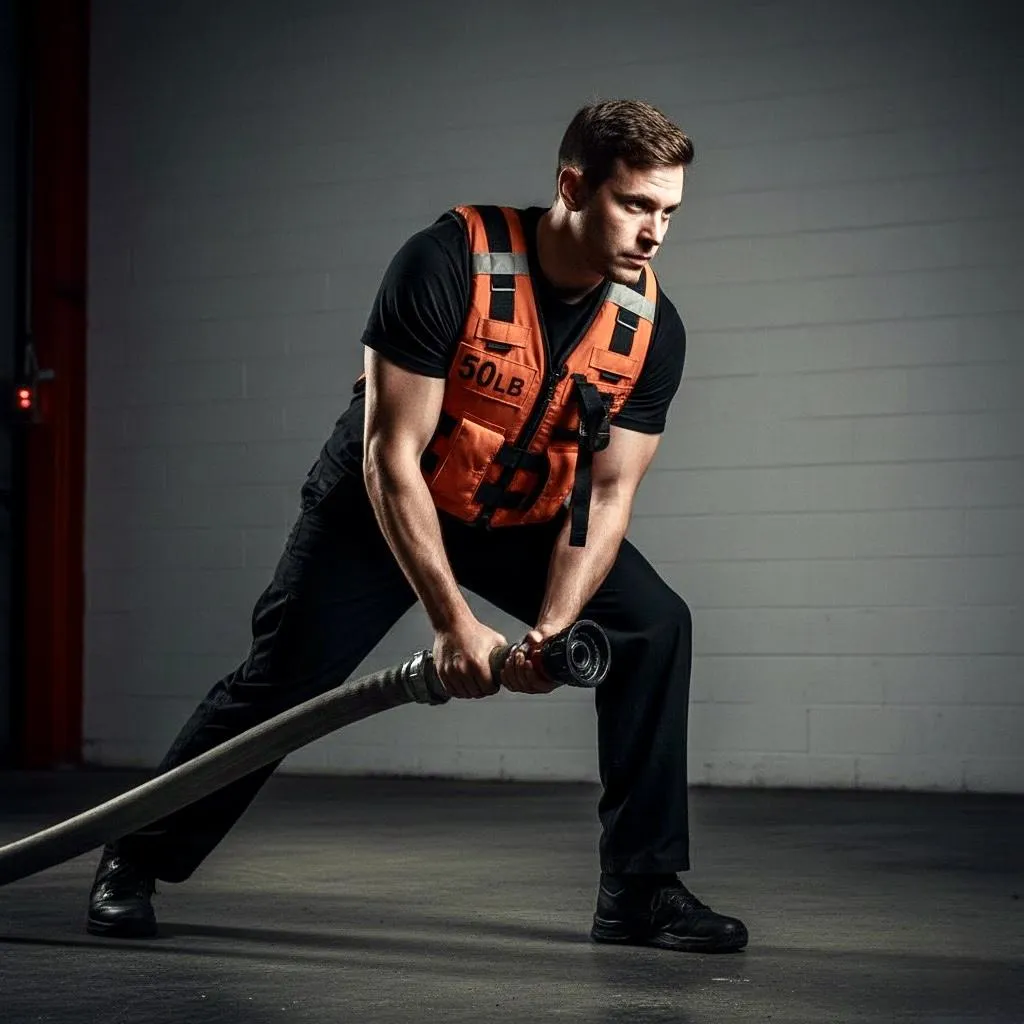
Phrase #2
Load Progression Phase (Weeks 3–4)
Add weight and balance work — replicate real CPAT fatigue safely.
Incremental vest loading
Rail-free endurance drills
Core stabilization sequence
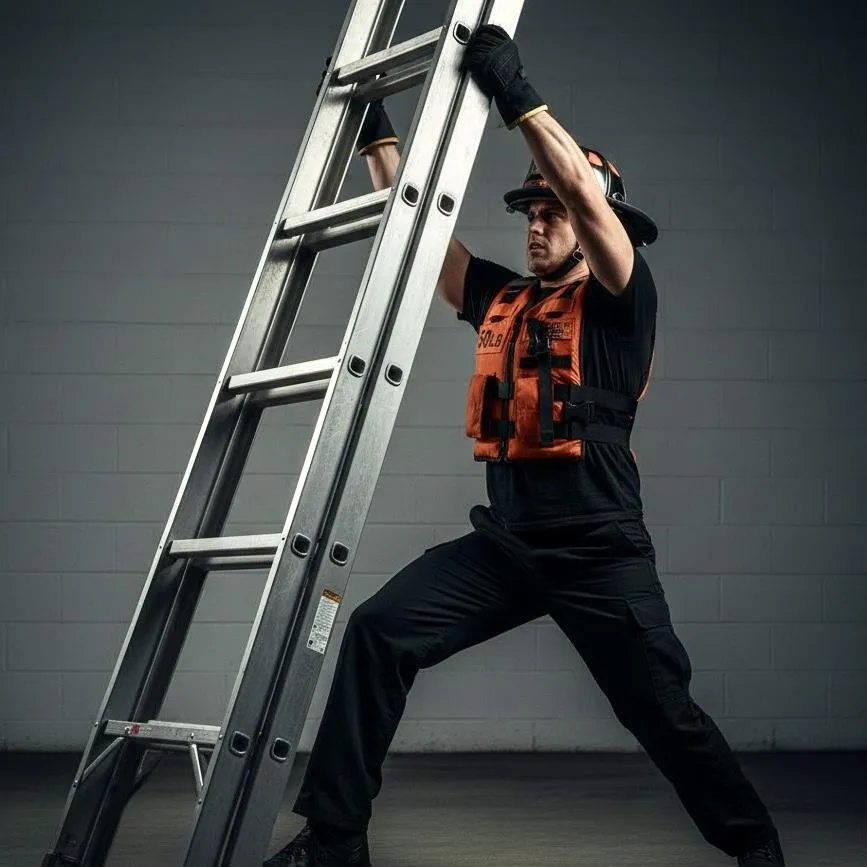
Phrase #3
Strength & Balance Phase (Weeks 5–6)
Improve stair stability and leg drive under fatigue.
Advanced proprioception work
Single-leg power drills
Load management pacing
Phrase #4
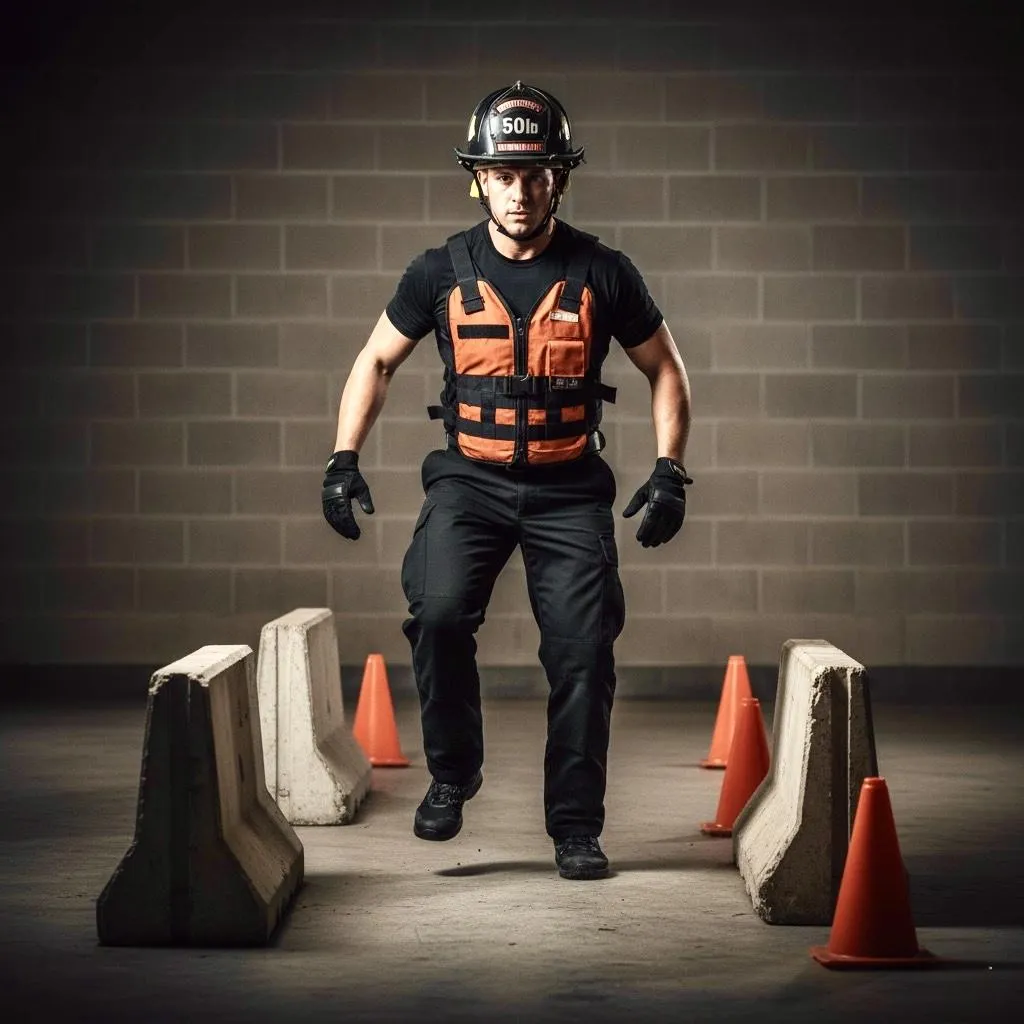
Performance Phase (Weeks 7–8)
Simulate full test conditions for confidence on test day.
Full 3:20 rail-free climbs
Station sequence mock test
Gear and mindset prep
Phrase #4
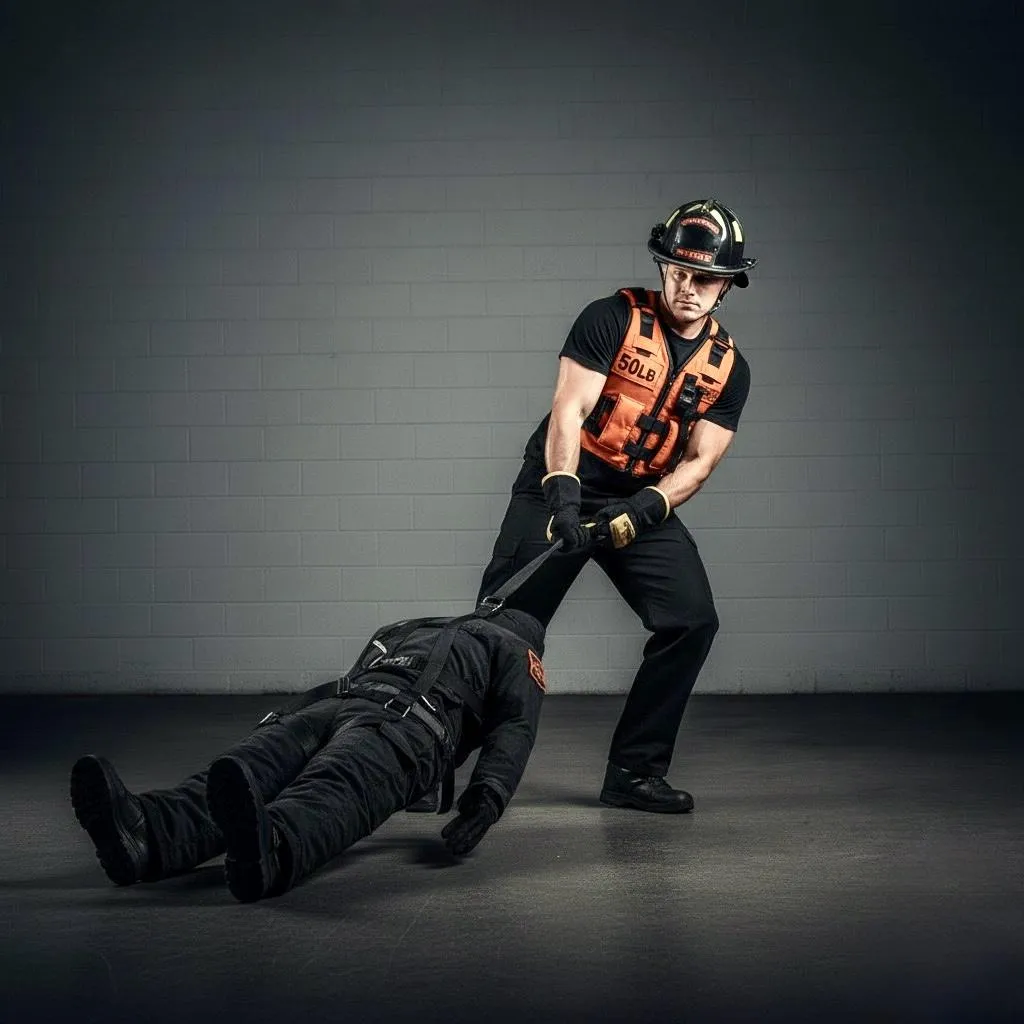
Test-Day Blueprint
Pre-test nutrition, warm-up routine, and gear checklist.
Zero confusion
Zero last-minute panic.
REAL PEOPLE. REAL RESULTS!
What Our Clients Says

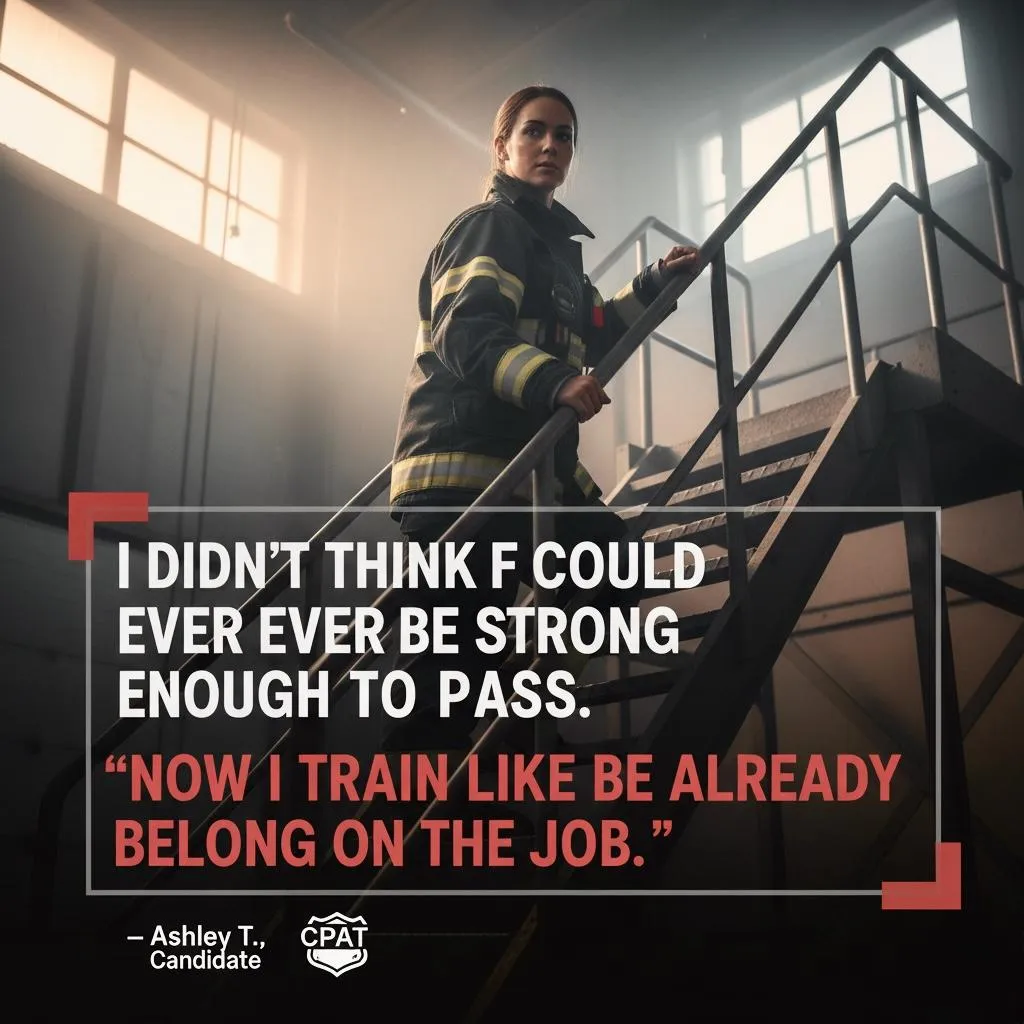
I failed twice before finding this. Passed next try. The breathing system alone changed everything.
– Anthony M.
Firefighter Candidate

“The rail-free balance progression made me bulletproof. I walked in confidently and crushed it.”
– Sara D.
Firefighter Candidate
⚡ DON’T WAIT
Every failed test costs time, money, and lost opportunities!
This system eliminates the guesswork and gets you ready the right way.
Meet Your Coach
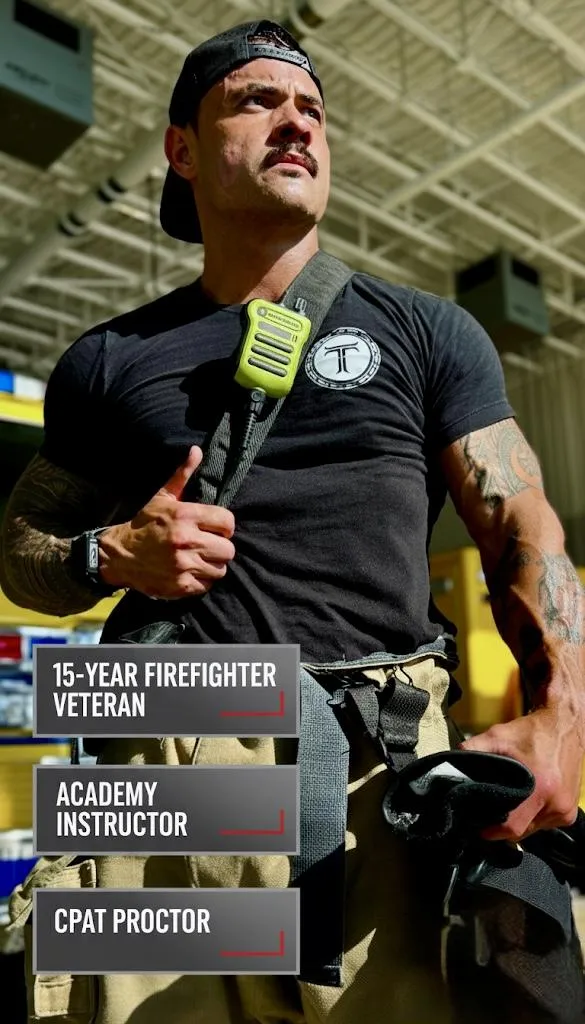
Muagututia “Ki’a” Tuala
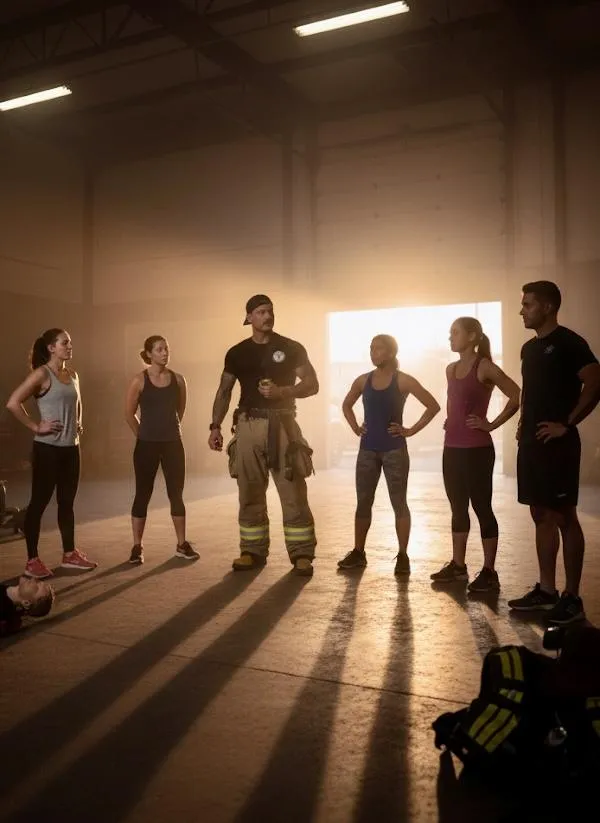
I’m a 15-year firefighter–paramedic, engineer, academy instructor, and CPAT specialist. I’ve spent the last several years helping candidates finally understand why they fail the CPAT—and exactly how to fix it.
I don’t teach general fitness. I teach firefighter mechanics: the breathing patterns, load tolerance, balance, and pacing strategies that determine whether you pass or fail.
Over the years, I’ve coached hundreds of candidates who were burning out at 1–2 minutes, touching the rails, panicking under load, or failing by seconds. Once they learned the correct mechanics, everything changed.
My experience comes from:
Coaching 500+ CPAT candidates
Developing technique for smaller-framed female athletes
Applied biomechanics across all CPAT events
Correcting breathing, rhythm, and pacing failures
Teaching mental control under fatigue and load
I grew up in a big Polynesian family where service was everything. My dad used to tell me, “Remember where you come from.” That shaped how I lead, how I teach, and how I serve.
Credentials
Firefighter–Paramedic, Engineer, Academy Instructor
15 Years in the Fire Service
Trained 500+ CPAT Candidates
CPAT Biomechanics Specialist
Fire Service Community Award
Personal Citation for Emergency Action
Recognized by City & County of Honolulu
My mission is simple: teach you the mechanics and mindset firefighters actually use—so you walk into your CPAT confident, prepared, and fire-ready.